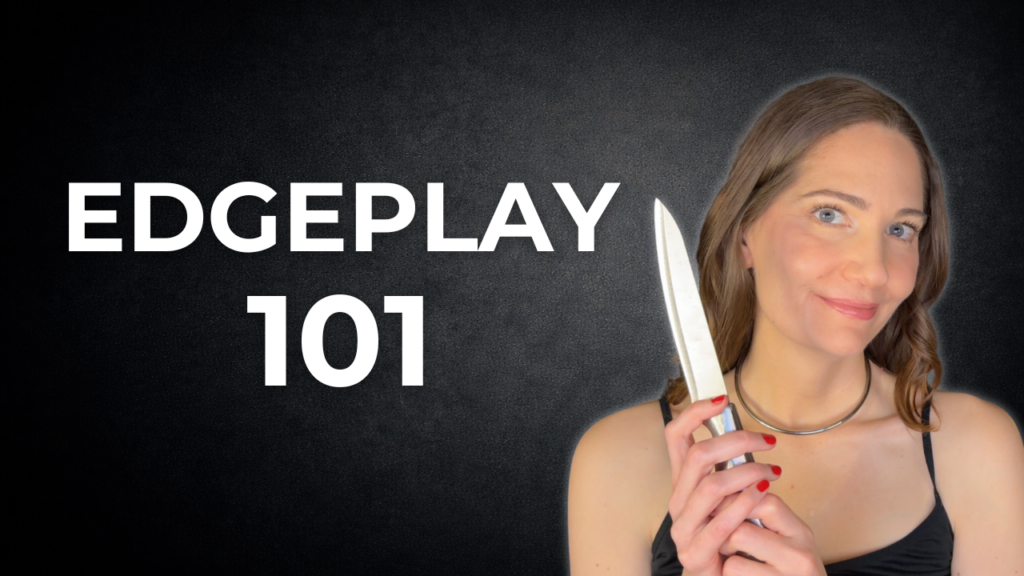
LISTEN TO THE EPISODE:
APPLE PODCASTS | SPOTIFY | OVERCAST
If you’ve been in the kink community for a while, or even if you’re just getting curious, you’ve probably heard the term “edgeplay.” These are the BDSM activities that go far beyond your typical handcuffs or spankings.
Whether you’re exploring new desires or searching for clear safety guidelines, it’s essential to be risk-aware and communicate openly. And if you want to explore the full spectrum of kinks, be sure to grab my free checklist of over 50 kinks so you can see what’s out there, you’ll definitely find a few surprises.
IN THIS EPISODE
- Learn the real risks and dangers behind the top 5 edgeplay activities in BDSM.
- Discover how experienced kinksters negotiate and practice edgeplay safely.
- Learn why edgeplay is more than just being extreme, and what it’s really about.
- Discover the most psychologically intense edgeplay activity, revealed and explained.
- Get essential safety tips and resources for exploring your boundaries in kink.
What Is Edgeplay?
Edgeplay refers to BDSM activities that push beyond conventional safety guidelines and into areas where physical or psychological risks are significant. We’re talking about the kinds of scenes that make even seasoned kinksters pause and reconsider, asking themselves, “Do I really want to do this?” Edgeplay is highly subjective: what feels extreme or dangerous to one person might be completely routine to another.
For context, most of the kink community used to follow the SSC (Safe, Sane, and Consensual) model. But edgeplay challenges this because, frankly, some activities just aren’t “safe” by vanilla standards. That’s where RACK—Risk Aware Consensual Kink– comes in. RACK means knowing the risks and accepting them with open eyes and explicit negotiation.

The 5 Most Intense Types of Edgeplay (Ranked by Danger)
After years in this lifestyle, I’ve seen just about everything. But these five types of edgeplay come up again and again because of their intensity and the risks involved. Here’s what you should know, straight from personal experience and conversations with other kinksters.
#5 Consensual Non-Consent (CNC) & Fear Play
Consensual non-consent (CNC), sometimes also called “rape play,” involves carefully negotiated scenarios where one person pretends not to consent. Fear play might include abduction fantasies or forced scenarios. The real risk here is psychological, not physical, but make no mistake: this is not something you should try lightly.
Our brains aren’t always good at distinguishing fantasy from reality, so these scenes can be genuinely traumatic for both the person playing the “victim” and the “Dominant.” In fact, after certain scenes, even experienced Doms have reported feelings of guilt or anxiety.
When CNC works, it can feel incredibly empowering, even healing, for some, but it can also open old wounds or cause new emotional distress. That’s why your negotiation needs to be bulletproof, boundaries must be absolutely clear, and safe words (or signals) are a must, even if they aren’t used during the scene.
Pro Tip: CNC isn’t something to “spice up” date night on a whim. I always suggest months of open communication and working with a kink-aware coach or therapist, especially for newcomers.
#4 Medical Edgeplay: Needles & Blood

This is where things start to get physically risky. Medical play can include everything from sterile needle insertions to more involved activities with catheters or speculums. Needle play, in particular, is beloved for its aesthetic qualities: I’ve seen stunning geometric patterns created with temporary piercings.
But when you break the skin, you’re inviting risks like infection, nerve damage, or rare but real complications like passing out from a rush of adrenaline or a drop in blood pressure.
Just because someone has the right tools doesn’t mean they have the right expertise. I know of experienced players who followed every protocol, and still, someone ended up needing antibiotics after a simple scene. The bottom line? Only try this with someone trained in proper sterilization, anatomy, and aftercare.
#3 Fire Play
Yes, this means real fire on real skin. Fire play covers everything from running a flame over your partner’s body to “fire cupping” or even lighting a flogger before use. The margin for error is razor-thin: a single drop of oil-based lotion can lead to an unexpected, serious burn. I’ve personally witnessed someone underestimate the power of a regular moisturizer; just one oversight resulted in a second-degree burn.
Fire play is visually stunning and taps into primal fears and desires, but even with experience and safety gear, you’re always dancing close to disaster. Only attempt with training and be ready for accidents.
#2 Weapon Play: Knives & Guns

Weapon play, most commonly with knives, brings a whole new level of trust and psychological intensity. Some scenes never involve cutting, just the thrill of a cold blade at someone’s throat. Others do cross into blood play. Knife play sits at the crossroads of fear and arousal in a uniquely powerful way, but it only takes a slip of the hand for things to go very wrong.
Gunplay, while rare and controversial, also exists, with people using either replicas or triple-checked unloaded firearms. Given the risks (physical and psychological), this is edgeplay for only the most prepared, and even then, caution can’t be overstated.
#1 Breath Play (Choking and Asphyxiation)
Breath play tops the edgeplay danger charts. This includes everything from hand-choking to suffocation, and there’s no fully safe way to do it. When you cut off air (or blood) to the brain, you risk unconsciousness in just seconds. Permanent brain damage or death can happen before you realize something has gone wrong.
More people have died from breath play than all the other types of edgeplay combined. It’s so dangerous that I will not teach it publicly, and I can’t stress enough: if you value your partner’s life and well-being, approach breath play with the utmost seriousness, and consider alternatives that don’t carry the same dangers.
Is Edgeplay Right for You?
Edgeplay isn’t about “proving” how hardcore you are. At its heart, it’s about trust and exploration, pushing the limits of connection with clear consent and communication. But you need a solid foundation first: knowledge, experience, and communication that go beyond what most couples ever achieve.
If you’re new to BDSM, don’t jump to edgeplay right away. Explore your limits gradually, build trust, and don’t hesitate to bring in a mentor, coach, or kink-aware therapist if needed.
Explore Safely, Explore Smart
Curious about what else is out there? Download my free checklist of over 50 kinks to discover ideas you might want to try, without the extreme risks that come with edgeplay. Remember: your journey should be thrilling, but safety and communication always come first.
Links From the Episode:
Want more? Sign up for my newsletter and get BDSM tips on the regular.